
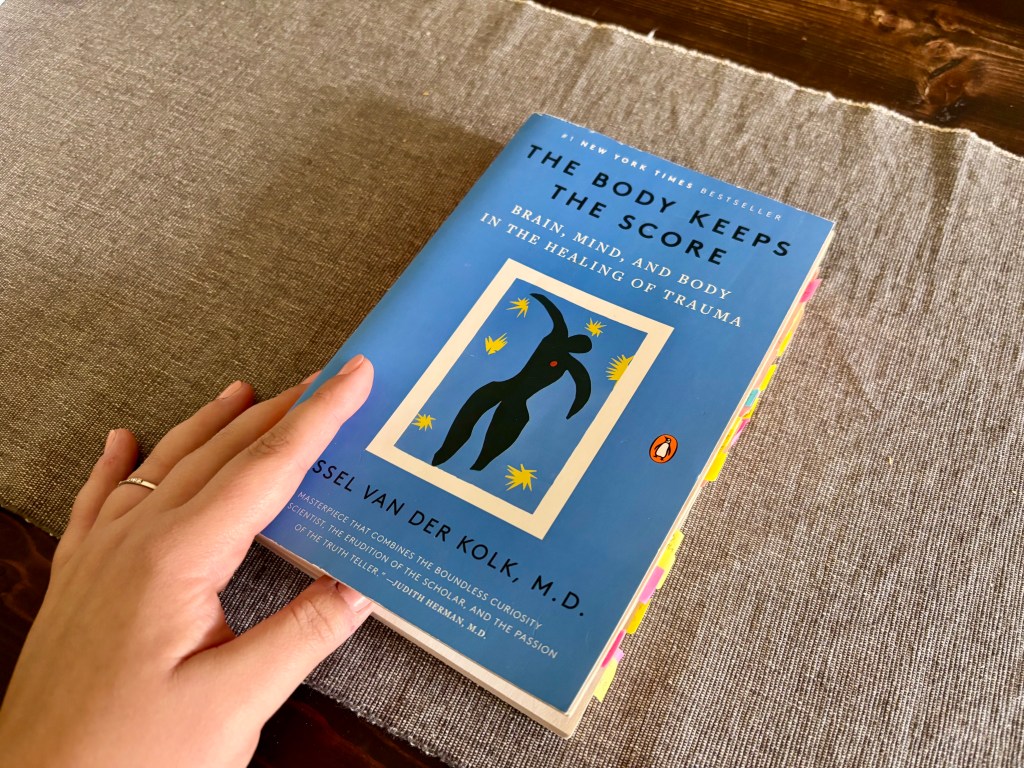
This is the first of, hopefully, many posts that will explore different topics that relate to emotional intelligence, building healthy habits, self-development and understanding how past (or present) traumas and situations may impact the way we interact with the world around us. Ultimately, we are all on a journey to become semi-well-adjusted humans, but in order to do so, we must first admit that we have room for growth. I know, SHOCKER…you’re not perfect and neither am I.
I am starting with The Body Keeps the Score: Brain, Mind and Body in the Healing of Trauma by Bessel van der Kolk because although it was only published in 2014, it is one of the most widely acclaimed books about trauma and the relationship it has with one’s body. It also happens to be the very first book I read when I sparked an interest in psychology and what I call “self-improvement” books back in college. This interest took hold when I started to unpack feelings I was having about my relationships in a very transitional period of my life, thus leaving me feeling untethered and searching for a meaning to so many things.
Now, the book does have some mixed reviews, with some noting the lack of empathy toward victims and others disagreeing with how opinionated the author can be, but overall I would say the book has offered groundbreaking and somewhat jarring insights as to what trauma is and how it leaves a lasting impact on the body and mind–even generations down the line. I would also be so bold to say that if you are not picking up this book with the ability to be objective, do not read it. It took me a few tries, but I finally got into it after finally understanding that traumatized people often traumatize others. Hence, the author’s focus on the abuser and why they did what they did. And although I do not fully agree with some of this focus, I do believe the message is important and we’ve heard it many times before: “hurt people hurt people.” Understanding that hurt is how we heal…
Being the all-or-nothing doer I am, once I finished the book I chose to begin my journey of self-discovery and self-improvement by truly understanding my “hurt” and learn how to heal. Though, what I didn’t realize at the time was that it’s not as simple as “I am going to learn this and be done.” No, it was in fact a much harder, and more time-consuming process than that.
So, what is trauma and how do we heal?
trau•ma (n): a deeply distressing or disturbing experience, often having significant or lasting negative effects on a person’s physical, emotional or personal well-being.
The Body Keeps the Score refers to the lasting physical and mental symptoms that trauma leaves on the body. Pain, anxiety and hypervigilance are all “scores” the body holds onto even when the rest of you wants to forget. Kolk discusses a few key symptoms one might experience post-trauma:
- Neurobiological Changes – Fundamental changes in the brain and mind’s ability to process information.
- Somatic Symptoms – Chronic fatigue, headaches, digestive problems, and muscle tension.
- Hypervigilance and Anxiety – The body stays on high alert, leading to difficulty sleeping, never feeling safe, etc.
- Flashbacks and Involuntary Memories – Traumatic events are relived through flashbacks, memories and even nightmares.
Because trauma can lead to a shutdown or disconnection from bodily sensation, those who have experienced trauma may find themselves seeking “a feeling” from something else. Either in a response to not feeling anything, or feeling so much and needing to numb that pain, survivors may try to replace or avoid that feeling with drugs, alcohol or even overworking. The latter I am much too familiar with, but I will save that story for another post.
Healing from these “scores” takes a lot of work because it requires re-wiring the brain and also an intentional connection with the body. Some ways to begin the healing process include:
- Regulating the Nervous System – Focus on teaching the body it is safe. This could be through therapy, mindfulness or breath work. Gaining control of the body and experiences helps regain agency instead of feeling trapped.
- Integrating Body and Mind – Re-establishing a connection between the mind and body is crucial for healing. Things like yoga and psychomotor therapy help with processing the body reactions in a safe way.
- Communal Experiences – Shared activities such as dancing, art, or even workout classes can create a sense of community that are very important when healing.
After reading The Body Keeps the Score and unpacking my own experiences with trauma and growing up in foster care, I now understand that so much of what I experienced was a result of trauma other people in my life endured. Kind of like a domino effect, and as I learned in this book, traumatized people often traumatize others, even if they have no intention of doing so. Unfortunately, that is a common experience for many former foster youth I know. We were all born into circumstances outside of our control and those circumstances will have lasting impacts on our body and minds, but with the right support and a little bit of learning, we just might be able to heal.
 Fostered to Flourish
Leave a comment